Porcelain and Principle: The History of Lladró’s Dr. Martin Luther King Jr. Figurine
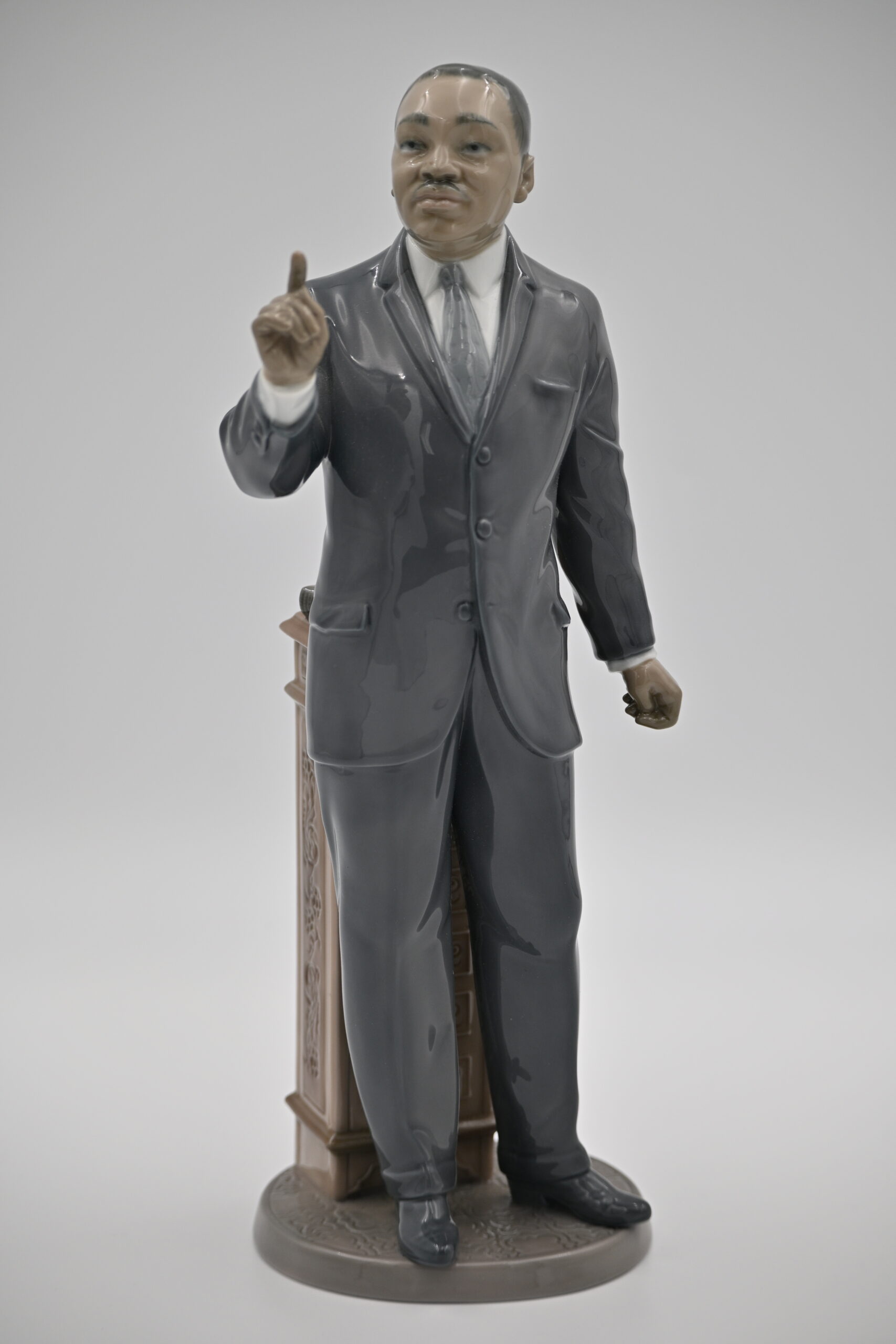
There are collectibles, and then there are objects that carry an idea. The Lladró Dr. Martin Luther King Jr. figurine belongs firmly in the second category. Behind its glazed surface and quiet gray suit sits a story about a Spanish porcelain dynasty, a shifting American market, and one of the most recognizable moments in civil-rights history — all compressed into roughly thirteen inches of fired clay.
A House Built on Three Brothers
To understand the figure, you first have to understand the name on the base. Lladró was founded in 1953 in Almàssera, near Valencia, Spain, by three brothers — Juan, José, and Vicente Lladró — who began by firing small porcelain pieces in a homemade kiln. Within a few decades the company had become one of the most recognized names in fine porcelain in the world, prized for delicate pastel glazes, flowing forms, and an almost theatrical sense of gesture. Today Lladró still produces its work at a single factory in Valencia, where each piece is handmade.
The mark you’ll find underneath these pieces often reads “DAISA” — short for Diseños Artísticos e Industriales, S.A., the Lladró entity that holds the copyrights to the company’s designs. On this particular figure, that copyright is dated 1993, the year the model was created and protected, just ahead of its commercial release.
The Black Legacy Collection
By 1990, Lladró had recognized something the broader collectibles industry had been slow to address: African-American collectors were an important and underserved audience, and there were very few luxury porcelain pieces that reflected Black culture and history with dignity. In response, the company developed what became known as the Black Legacy Collection — a line of figurines crafted in warm browns, creams, and blacks, depicting jazz musicians, family groupings, children, and cultural figures.
Among the most significant and sought-after pieces in that collection was Dr. Martin Luther King Jr. Where many of the Black Legacy figures celebrated everyday life and music, the King figurine reached for something larger: the depiction of a historical icon at a defining moment.
 The Figure Itself
The Dr. Martin Luther King Jr. figurine carries the model number 7528 (catalogued as 01007528) and was sculpted by Salvador Furió, one of Lladró’s master sculptors, known for his historical and character studies. It was issued to the market in 1994 and retired roughly a decade later — sources list the retirement as either 2004 or 2005. Its original retail price was around $395.
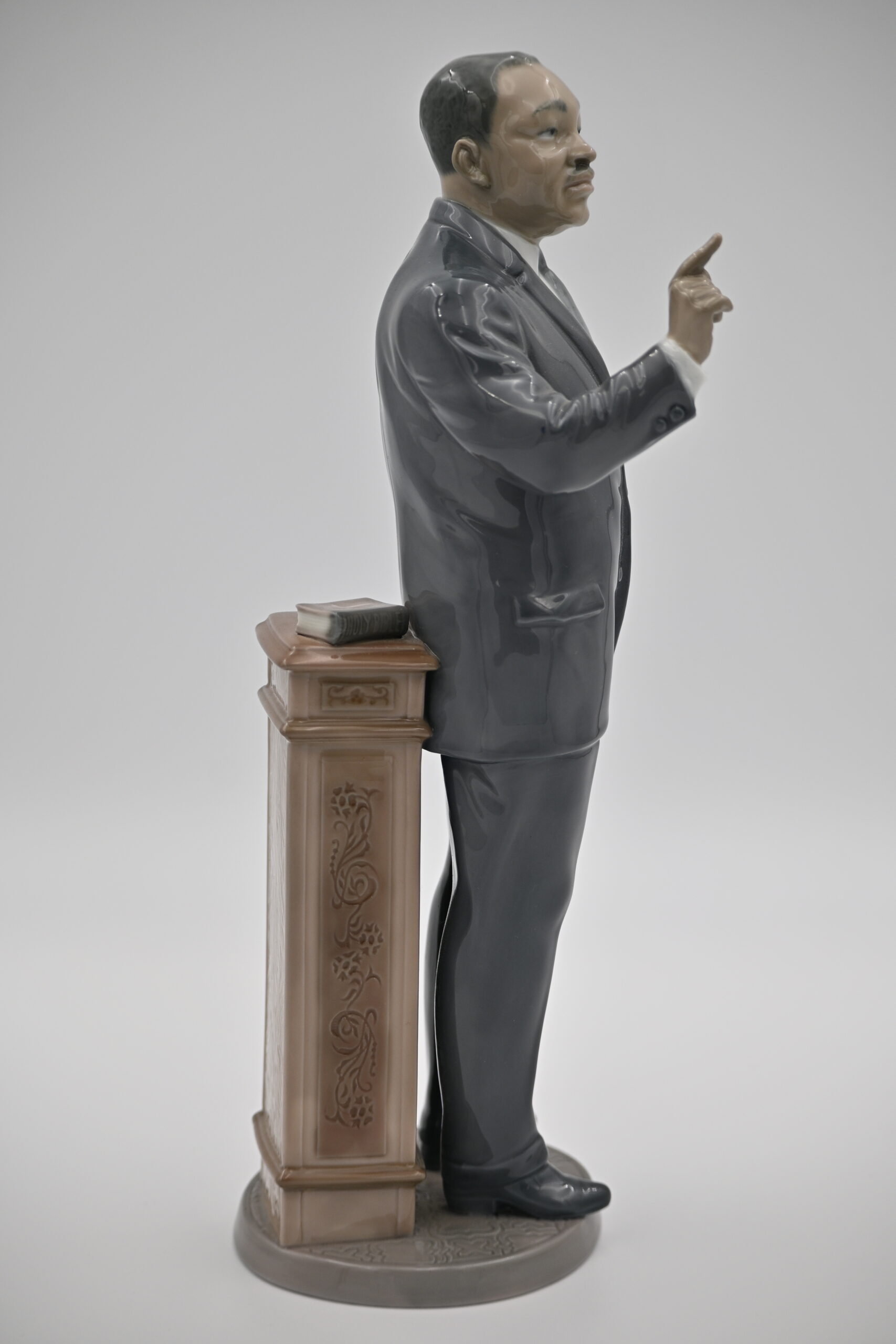
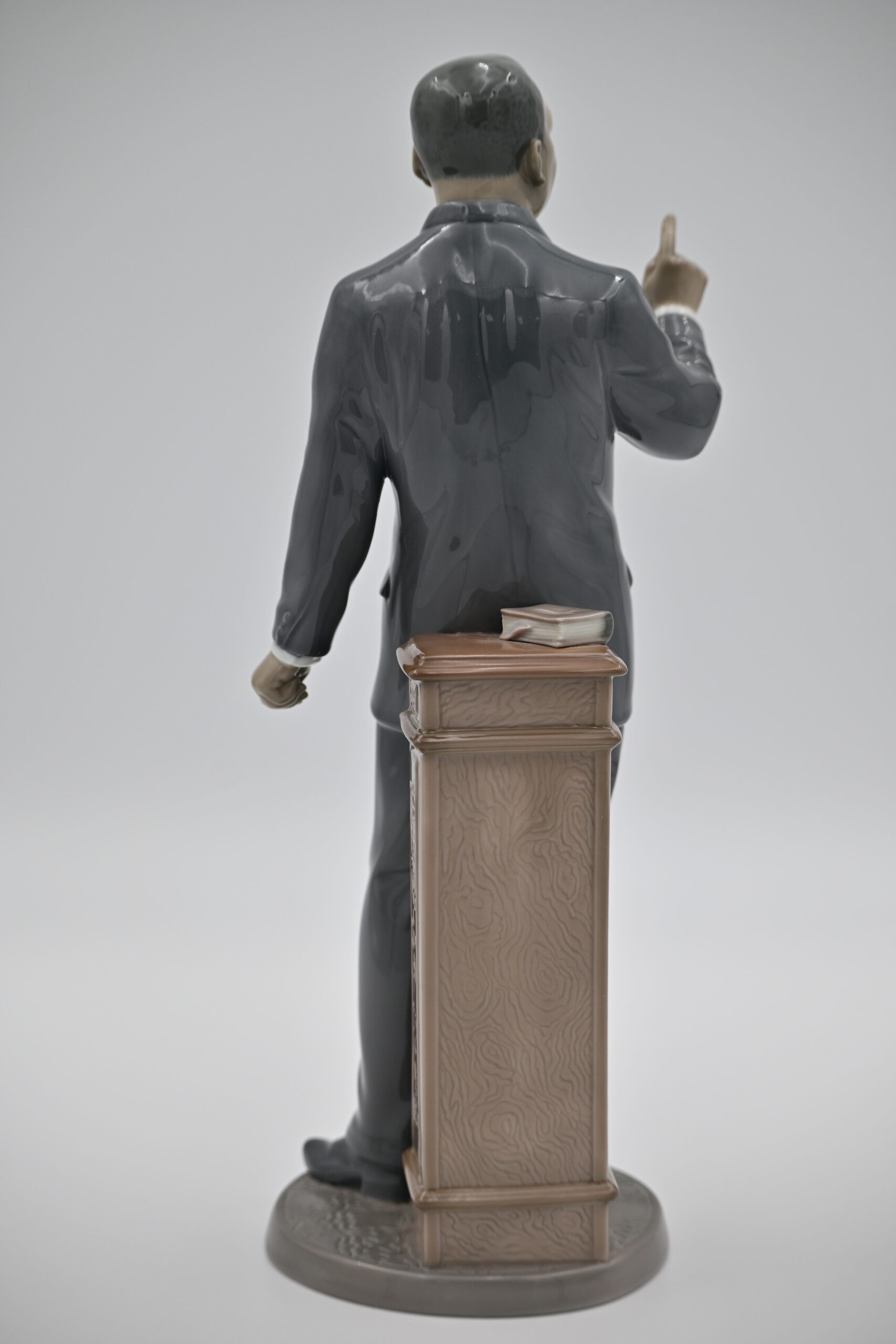
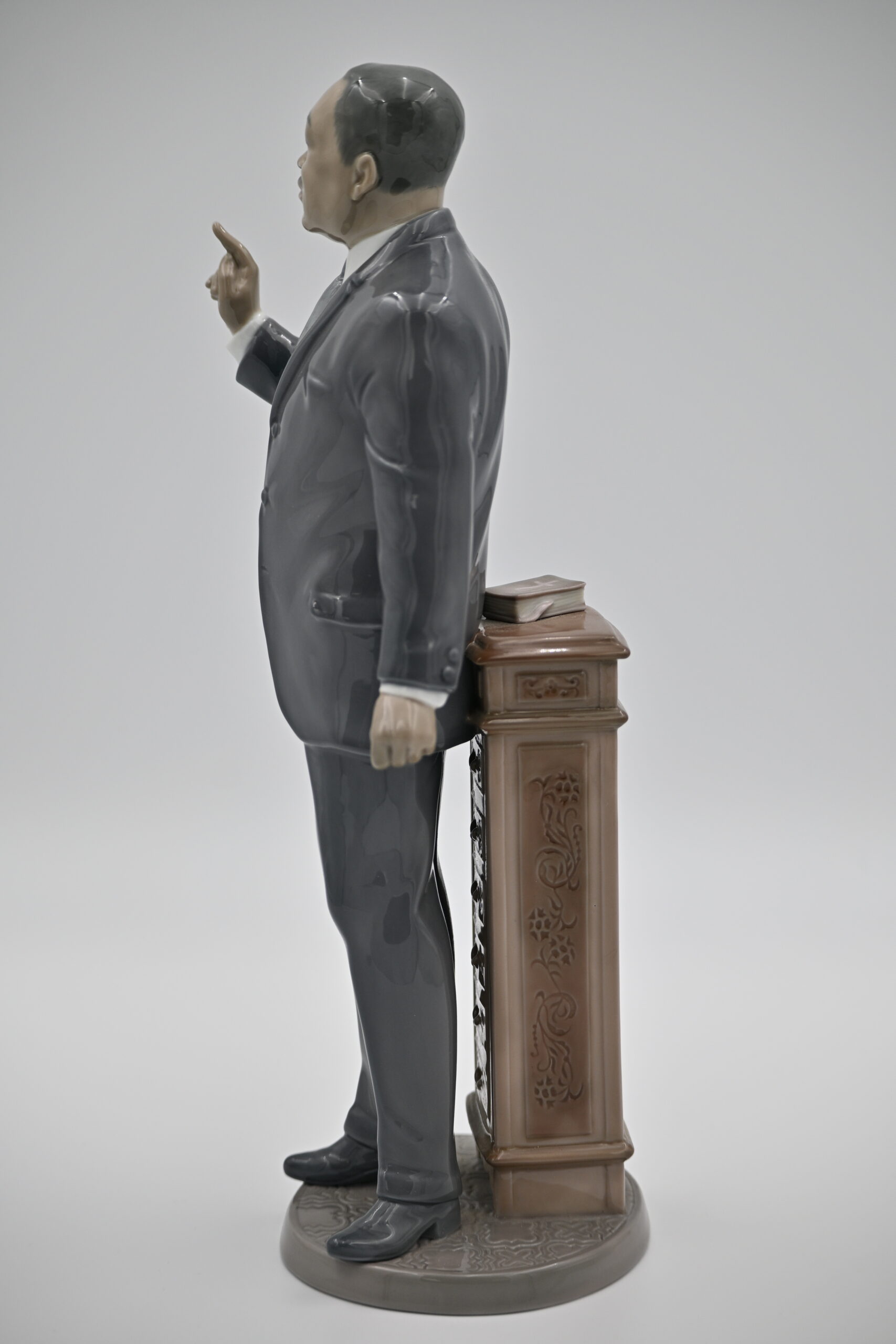
The piece stands about 12.5 inches tall on a matte base, finished in Lladró’s signature glaze. Furió posed King in mid-oration: dressed in a charcoal-gray suit, his left hand at his side and his right index finger raised toward the heavens. That raised finger is widely understood as a nod to his 1963 “I Have a Dream” address — the gesture of a preacher and orator at full height. Beside him stands a carved, wooden-effect lectern decorated with engraved flowers, a Bible resting on top, grounding the figure in King’s identity as a Baptist minister as much as a movement leader.
Importantly, the figurine was produced under license from the estate of Dr. Martin Luther King Jr., which is why authentic examples often carry estate-licensing language on the original box. That detail matters both historically and commercially: it places the piece within the carefully guarded world of King’s official likenes rights.
 Marks, Authenticity, and Provenance
Genuine examples are identified by the blue Lladró backstamp on the underside — the familiar tulip mark — along with the model title and the DAISA copyright. Beginning in 1986, Lladró also embossed a four-digit identification number into the bottom of its pieces, another point of verification for collectors.
This particular figure carries something rarer still: a personal dedication inscribed in marker on the base — “To Allyson [signature] 3.14.97.” Personal inscriptions like this are not factory marks, but they are exactly the kind of human detail that gives a single example its own story. A piece purchased and dedicated as a gift in March 1997 has a small, traceable life of its own — the sort of provenance that distinguishes one survivor from the rest of the edition.
Collectibility Today
Because the model was retired and never reissued, the supply is fixed and slowly thinning. Condition drives value: chips, cracks, crazing, or repairs sharply reduce desirability, while an intact glaze, sharp detail, and an original box command a premium. Retired examples have appeared on the secondary market across a wide range, with mint, boxed pieces frequently reaching several hundred dollars and beyond, and selected listings asking well past that.
For collectors, the appeal is layered. There’s the craftsmanship of a hand-finished Spanish porcelain. There’s the historical weight of the subject. And there’s the cultural significance of the Black Legacy Collection itself — a line that marked a deliberate step toward representation in a category that had long overlooked it.
A figurine like this one — in excellent condition, glaze intact, and carrying a dated personal dedication — sits at the intersection of all three: art object, historical tribute, and a small, personal piece of someone’s life. That is what turns a porcelain figure into something a collector wants to keep.